

THC concentrates are highly potent cannabis extracts, offering THC levels between 40% and over 90%, compared to the 15-25% in regular cannabis flower. These products are popular for their strength, efficiency, and variety, including wax, shatter, oils, and rosin. They cater to both recreational users seeking intense effects and medicinal users needing precise relief.
Key Points:
- Extraction Methods: Solvent-based (e.g., butane, ethanol) or solventless (e.g., heat, pressure).
- Forms: Hash, kief, wax, shatter, live resin, oils, and distillates.
- Consumption: Dabbing, vaping, mixing into flower, or oral use.
- Safety: Start with small doses, ensure products are lab-tested, and store properly in airtight, light-blocking containers.
- Legal in South Africa: Private use and possession are allowed under the Cannabis for Private Purposes Act (2024), but commercial activities remain illegal.
Understanding THC concentrates’ production, safe use, and legal framework can help you make informed choices. Always check for lab-tested products and follow dosing guidelines to avoid adverse effects.
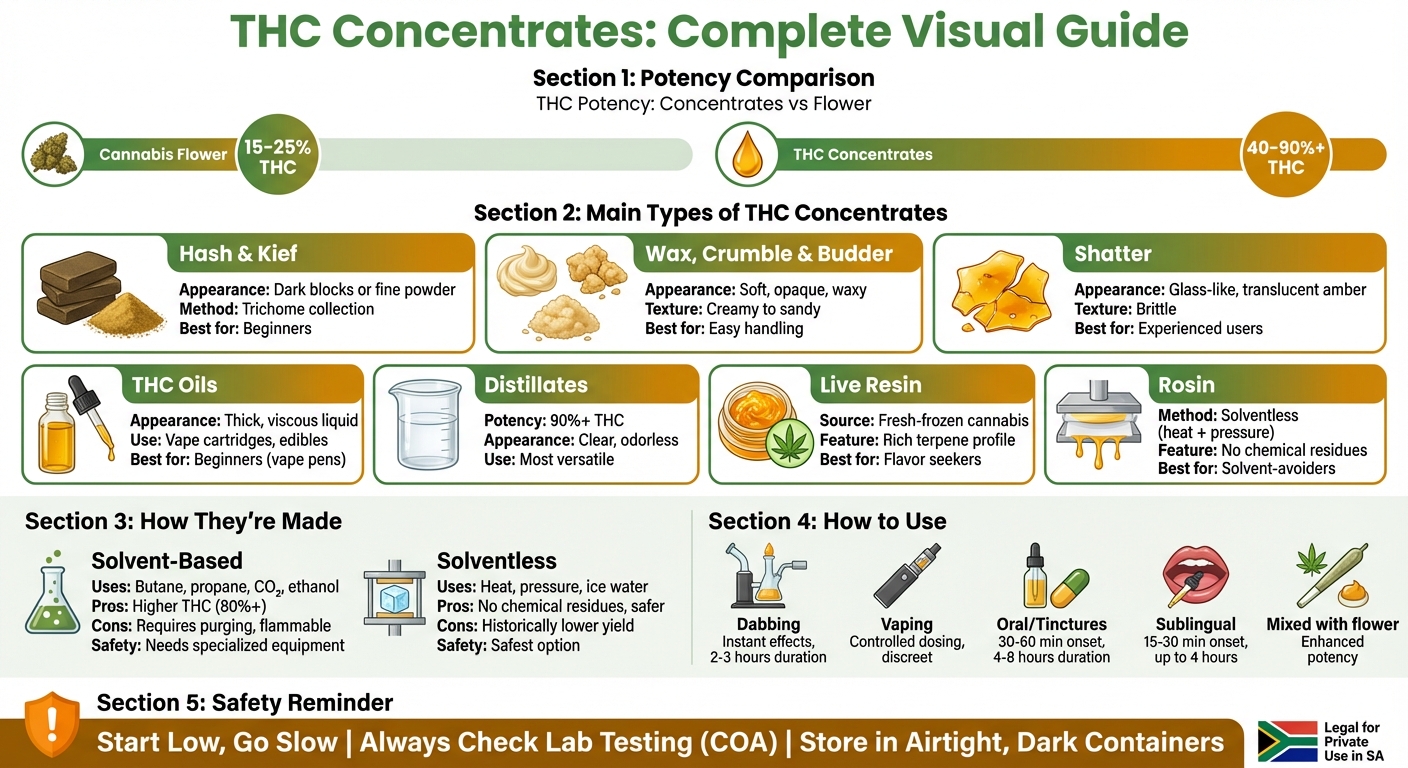
THC Concentrates vs Cannabis Flower: Potency and Types Comparison
How THC Concentrates Are Made
Solvent-based vs solventless extraction
The process of making THC concentrates involves separating cannabinoids and terpenes from the cannabis plant. This can be done using two main methods: solvent-based and solventless extraction.
Solvent-based extraction relies on chemical solvents like butane, propane, carbon dioxide, or ethanol to dissolve and extract these compounds. In contrast, solventless extraction uses physical techniques such as heat, pressure, cold water, agitation, or sifting to separate trichomes without introducing any chemicals into the process.
One major difference between these methods lies in post-processing. Solvent-based extraction usually requires additional steps, like purging, winterising, or distillation, to remove residual solvents, fats, waxes, and chlorophyll. If not properly purged, harmful chemicals may remain in the final product. On the other hand, solventless methods skip these steps entirely, producing concentrates free from chemical residues.
Safety is another key consideration. Solvents like butane and propane are highly flammable, requiring specialised equipment to prevent explosions. For home extraction, alcohol-based methods are often viewed as safer alternatives. However, solventless extraction is widely considered the safest option overall since it eliminates the use of potentially dangerous or toxic chemicals.
Historically, solvent-based methods have been able to achieve higher THC concentrations - often surpassing 80% THC. However, advancements in solventless techniques have narrowed this gap. Both methods can effectively preserve terpenes when done correctly. For example, propane extraction paired with flash-freezing creates live resin with rich terpene profiles, while solventless methods like rosin pressing or ice water extraction also deliver a full-spectrum experience with robust flavours.
What affects quality and potency
While THC percentage is often the go-to measure of potency, terpene content plays an equally important role in shaping the flavour and overall effects of a concentrate. Terpenes are the aromatic compounds responsible for cannabis’s distinctive smell and taste, and they work together with cannabinoids to enhance the user experience.
Temperature plays a critical role in preserving both terpenes and cannabinoids. Techniques like flash-freezing help lock in these compounds, while cold extraction reduces the presence of unwanted elements like waxes and chlorophyll. On the flip side, excessive heat can degrade delicate terpenes, leading to a less aromatic and flavourful product.
The choice of extraction method also impacts the end result. Full-spectrum concentrates retain the complete array of cannabinoids and terpenes, offering a richer experience. In contrast, distillates - which are highly refined and can exceed 90% THC - often lose most of their terpene content during processing. Jim Moore, Vice President of New Product Development at Prospiant, explains:
"Ethanol extraction offers higher throughput compared to CO₂ and hydrocarbon systems; it's perfect for making distillates and isolates at scale."
He further notes:
"Butane/propane extraction has a lower throughput than ethanol but enables the processor to capture all major terpenes and cannabinoids in one operation."
To ensure safety and consistency, it’s crucial to choose lab-tested products, particularly with solvent-based concentrates. Lab testing confirms the purity and potency of the product and ensures it’s free from harmful residual solvents. In South Africa, these factors are closely regulated by law.
Extraction laws in South Africa
In South Africa, THC extraction is tightly controlled by regulations. Under the 1965 Medicines Act, THC is classified as a Schedule 7 substance, meaning it requires a permit for medicinal use. When used for therapeutic or industrial purposes, THC can be reclassified as a Schedule 6 substance, which necessitates either a prescription or an official permit.
Commercial THC extraction for medicinal products must comply with Good Manufacturing Practice standards and must be conducted in facilities licensed under Section 22C of the Medicines Act. For industrial uses - such as import, export, wholesale distribution, or cultivation - a permit from the Department of Health under Section 22A(a)(i) is mandatory.
Although the Cannabis for Private Purposes Act (enacted on 29 May 2024) decriminalised private cultivation and use, it does not allow for commercial extraction or sale. The South African Health Products Regulatory Authority (SAHPRA) oversees medical cannabis regulations, and anyone looking to engage in commercial extraction must obtain the proper licences to avoid severe legal penalties.
Cannabis Concentrates for Beginners: Solventless vs. Solvent-Based Extracts
Types of THC Concentrates
THC concentrates come in a variety of forms, each offering its own texture, consumption method, and experience. Let’s break down the main types available.
Hash and Kief
Kief is a fine powder made up of trichomes collected from cannabis flowers, usually through a multi-chamber grinder. It’s versatile - sprinkle it on joints, add it to bowls, or even mix it into your coffee. Hash, on the other hand, comes in different forms. Classic hash often appears as dark, compact blocks resembling chocolate, while bubble hash - made using ice water extraction - has a softer, crumbly texture. Hash can be smoked in a chillum pipe, added to flower, vapourised, or dabbed if it’s high quality. In Southern Africa, these concentrates are widely recognised and are a great starting point for those new to cannabis concentrates.
Wax, Crumble, and Budder
These concentrates are soft and opaque, offering textures that are easy to handle. Wax feels less oily and has a waxy consistency, budder is creamy and fluffy, and crumble is chunkier with a sandy texture. They’re typically consumed via dabbing, vaping, or by sprinkling them on flower. Wax is particularly beginner-friendly because of its soft and malleable nature. Tools like dab rigs, torches, or electronic dab rigs (such as the PuffCo Plus) are commonly used with these concentrates.
Shatter and Pull-Snap
Shatter stands out with its glass-like, translucent amber appearance and is known for its high purity and potency. However, its brittle nature requires careful handling, making it better suited for seasoned users. Pull-snap has a toffee-like consistency and is slightly easier to manage. Both are usually vapourised or dabbed but can also be sprinkled on flower for an added kick.
THC Oils and Distillates
THC oils are thick and viscous, while distillates are highly refined, nearly pure liquids that are odourless and flavourless. These products are incredibly versatile and are used in vape cartridges, edibles, tinctures (taken sublingually or added to drinks), and topicals. Vape pens with pre-filled oil cartridges are especially popular among beginners in South Africa. They’re affordable, easy to use, discreet, and clearly labelled for potency. Compared to dabbing, vape pens often provide a milder experience. Distillates, which can exceed 90% THC, are among the most potent concentrates available.
Live Resin and Rosin
Live resin is made from fresh-frozen cannabis, preserving the plant’s original flavours and terpene profile for a richer, more aromatic experience. Rosin, on the other hand, is a solventless concentrate created using heat and pressure. Its texture ranges from sap-like to solid, making it an excellent choice for those avoiding solvents. With minimal processing and an easy-to-handle texture, rosin is also beginner-friendly. Both live resin and rosin are typically consumed through dabbing or vapourising, using tools like dab rigs, vapourisers, or vape pens.
Safe Consumption and Dosing
Consumption Methods and Tools
Dabbing involves using a heated dab rig to instantly vaporise a small, rice-grain-sized portion of concentrate. To handle the concentrate, you'll need a dabber tool, and a torch is used to heat the nail or banger. Some prefer a nectar collector, which is essentially a heated straw that directly vaporises the concentrate. Keeping the temperature just right is key to retaining both the flavour and potency of the concentrate.
Vaping provides a more controlled way of consuming concentrates. Vapourisers or vape pens heat the extract to create vapour without combustion, making it easier to manage dosage and ensuring quick absorption. Vape cartridges - often filled with CO₂ oil, distillate, live resin, or rosin - are particularly popular among beginners due to their discreet and easy-to-use design. To ensure a clean and flavourful experience, always maintain your equipment properly.
Dosing Guidelines for Beginners
Concentrates are much stronger than traditional cannabis, so starting with very small amounts is essential.
"Start low, go slow, and stay low is good advice, especially if you're new to (or newly back to) using cannabis." - Peter Grinspoon, MD, Harvard Health Publishing
With THC levels ranging from 80–99% in concentrates compared to 18–25% in flower, beginners should begin with a dab the size of a grain of rice or just one small puff. Methods like dabbing or vaporising produce effects almost instantly, lasting about 2–3 hours. On the other hand, oral consumption via tinctures takes 30 minutes to an hour to kick in and can last 4–8 hours. Sublingual methods (under the tongue) start working in 15–30 minutes and last up to 4 hours.
Taking too much can lead to unpleasant effects like anxiety, paranoia, or panic attacks. While these symptoms usually subside within an hour, some mild aftereffects might linger for a couple of days. Although you can't overdose on THC oil, consuming excessive amounts can be highly uncomfortable.
These dosing tips provide a foundation for safer consumption.
Harm-Reduction Practices
Besides careful dosing, several harm-reduction strategies can help make your experience with concentrates safer.
Avoid driving or operating heavy machinery for at least 3–4 hours after vaping and 8–12 hours after consuming edibles. Store all cannabis products securely out of reach of children and pets, especially edibles that might look like regular sweets.
Steer clear of mixing concentrates with alcohol or other substances, as this can amplify both the effects and potential side effects. If you experience anxiety or discomfort, try to stay calm, breathe slowly, and hydrate with water or a sugary drink. Some people find that a small dose of CBD oil can help counteract THC's psychoactive effects. If the situation feels overwhelming, don't hesitate to seek medical advice.
If you have a personal or family history of anxiety, panic attacks, or schizophrenia, consult a healthcare professional before using concentrates.
sbb-itb-e2e45ce
Legal and Social Context in South Africa
Legal Framework for THC Concentrates
In September 2018, South Africa's Constitutional Court made a landmark decision to decriminalise the private use, possession, and cultivation of cannabis by adults. This marked a significant shift in the country's approach to dagga. The Cannabis for Private Purposes Act (CPPA), signed into law on 29 May 2024, built on this ruling by defining what "private use" means and setting clear quantity limits.
Under the CPPA, adults can legally possess and consume THC concentrates in private, as long as they stay within specific restrictions. However, public consumption and use in the presence of non-consenting individuals remain illegal. The law also prohibits cannabis use in private spaces if a non-consenting adult or a minor is present, and consuming cannabis in a vehicle on a public road is strictly forbidden.
The CPPA outlines possession limits: adults can carry up to 25 grams in public, 150 grams in private, or 300 grams when shared within a household. While gifting cannabis without payment is allowed within these limits, any form of commercial activity - such as buying, selling, advertising, or importing and exporting cannabis - remains illegal.
"An adult person may, [sic] use or be in possession of cannabis in private for his or her personal consumption in private. The use, including smoking, of cannabis in public or in the presence of children or in the presence of non-consenting adult persons is not permitted. The use or possession of cannabis in private other than by an adult for his or her personal consumption is not permitted. The cultivation of cannabis by an adult in a private place for his or her personal consumption in private is no longer a criminal offense."
– Chief Justice Raymond Zondo
These legal developments have created a framework for how both traditional and modern cannabis products, including THC concentrates, fit into South African society.
Cannabis in South African Society
Dagga, as cannabis is widely known in South Africa, has long-standing cultural significance. Its traditional use by indigenous communities has contributed to the country's evolving acceptance of personal cannabis choices. The 2018 decriminalisation and the 2024 CPPA reflect this shift, recognising the plant's cultural importance while encouraging responsible use.
THC concentrates are a modern take on the traditional use of dagga. While dried cannabis remains common, there’s growing interest in concentrates, especially among those looking for a more discreet or potent experience. This mirrors global trends, but the evolution of cannabis use in South Africa remains deeply connected to its unique history and heritage.
Cannabis Clubs and Industry Developments
Within the framework of these legal changes, community-based initiatives have flourished. Dagga Private Clubs (DPCs) have gained popularity since decriminalisation, offering members a safe space for education and responsible cannabis use. These clubs operate within the law, focusing on private, member-only activities rather than engaging in commercial transactions.
On a broader scale, the South African government is working on a National Cannabis Master Plan to address the regulatory environment and explore potential pathways for legal commercial activities. While still under discussion, the plan acknowledges the dual role of cannabis as both a cultural tradition and an economic opportunity. In the meantime, cannabis clubs remain at the forefront of harm reduction and education, helping users - especially those new to THC concentrates - understand the legal and practical aspects of responsible consumption.
Choosing and Storing THC Concentrates
How to Assess Quality and Safety
When it comes to THC concentrates, ensuring quality and safety should always be your first priority. Start by checking for a Certificate of Analysis (COA) from an accredited lab. This document confirms the contents of the concentrate and verifies that it’s free from harmful contaminants like residual solvents and heavy metals.
Surprisingly, testing reveals that 37% of products contain residual solvents like ethanol, isopropanol, and acetone. These solvents must comply with USP 467 and ICH safety limits, and Class 1 (carcinogenic) solvents should be avoided entirely. Heavy metals are another concern - 15% of products exceed safe oral limits, while 44% surpass safe inhalation standards. A reliable COA will screen for harmful substances such as arsenic, cadmium, lead, mercury, chromium, and copper.
Another critical step is verifying the THC content listed on the label. Reputable suppliers provide batch-specific lab results, not generic certificates. If a supplier can’t produce up-to-date testing results when asked, it’s a red flag - it’s better to look elsewhere.
Storage Tips for South African Conditions
South Africa’s climate poses unique challenges for storing THC concentrates, so proper storage is key to preserving their potency and quality. Studies show that resin stored at room temperature loses 64–74% of its THC content over 48 months, and exposure to UV light speeds up this degradation.
To minimise this, store your concentrates in glass containers - preferably black or amber jars that block light. Glass doesn’t react with the concentrate or leach chemicals, making it a safer option. Always keep the containers upright to prevent the concentrate from sticking to the lid. While silicone jars are convenient for short-term storage, they aren’t airtight, and high-terpene concentrates can degrade the silicone over time.
Temperature control is another crucial factor, especially in warmer regions. In humid or hot conditions, refrigerating your concentrates is a good idea. Use airtight containers to avoid condensation, which can lead to mould or affect the flavour. However, avoid freezing concentrates - extreme cold makes trichomes brittle and increases the risk of condensation during thawing. For day-to-day storage in cooler conditions, a dark, cool cupboard works just fine. With proper care, your concentrates can retain their quality for a year or more.
Finding THC Concentrates Through Amazol
Once you’ve nailed down quality checks and storage methods, the next step is finding a trusted source. Amazol offers a carefully curated selection of THC concentrates, with discreet delivery available across South Africa. Their focus on sourcing thoroughly tested products ensures you know exactly what you’re getting. Whether you’re looking for wax, shatter, oils, or other forms, Amazol’s diverse range caters to different preferences and experience levels.
Beyond products, Amazol also provides educational resources to help you understand concentrates, dosing, and safe usage. Their commitment to transparency and customer education makes navigating South Africa’s private-use legal framework much simpler and more informed.
Conclusion
THC concentrates have reshaped the way cannabis is consumed, offering potency levels that often range between 60% and over 90% THC - far surpassing the typical 18–25% found in traditional flower products. From shatter and wax to rosin, live resin, and distillates, knowing the distinctions between extraction methods can help you choose products that align with your preferences and needs.
When it comes to potency, safety should always come first. For those new to concentrates, starting with small doses is essential to avoid any overwhelming effects. Also, don’t overlook the importance of checking the Certificate of Analysis to confirm that your products are free from harmful contaminants.
In South Africa, it’s best to purchase regulated and tested products through SAHPRA-approved channels. Proper storage is equally important to ensure your concentrates retain their potency over time.
By following these steps - understanding extraction methods, dosing responsibly, and storing products correctly - you can enjoy THC concentrates safely and responsibly within South Africa.
For a seamless experience, Amazol offers expertly sourced, lab-tested THC concentrates with discreet delivery across the country. Their resources on dosing, consumption methods, and harm reduction make it easier to navigate this space with confidence. With the global THC concentrate market projected to reach US$2.4 billion by 2030, making informed, responsible choices remains essential.
FAQs
What is the safest way to extract THC concentrates?
The safest ways to extract THC concentrates are solvent-less techniques and CO₂ extraction. Solvent-less methods skip chemical solvents entirely, instead using water, heat, or pressure to separate the trichomes from the cannabis plant. Popular examples include ice-water extraction (often called bubble hash), dry-sifting (collecting kief), and rosin pressing, where heat and pressure are used to draw out resin from the plant. These techniques are seen as healthier since they leave no chemical residues behind in the final product.
When solvents are involved, supercritical CO₂ extraction stands out as the safest choice. CO₂ is a food-grade, non-toxic gas that can be fully reclaimed during the process, leaving little to no solvent residue. Unlike hydrocarbon solvents such as butane or propane, CO₂ extraction avoids risks like flammability or chemical contamination. This makes it a go-to method for producing clean, high-quality THC concentrates.
How can I make sure the THC concentrate I purchase is safe and contaminant-free?
When purchasing THC concentrates, it's crucial to prioritise safety. Always opt for products from trusted, well-established brands that offer a certified laboratory analysis (COA). This document should clearly indicate that the product has been tested for pesticides, heavy metals, residual solvents, and microbial contamination.
For extra assurance, consider verifying these results through an accredited lab or using a dependable home-testing kit. These precautions can help you steer clear of harmful contaminants, ensuring a safer and more satisfying experience.
What are the rules for possessing THC concentrates in South Africa?
In South Africa, adults aged 18 and older are legally permitted to have cannabis for their own private use. However, when it comes to THC concentrates like oils or waxes, the law does not clearly specify the allowable limits.
Staying up to date with the latest regulations is crucial. Make sure any cannabis use or possession is strictly for personal and private purposes to avoid running afoul of the law.
0 comments