

Cannabis edibles are a smoke-free way to consume cannabis, offering options like gummies, chocolates, and beverages. In South Africa, personal cannabis use was decriminalised in 2018, leading to increased interest in edibles. However, dosing can be tricky due to delayed effects (30 minutes to 2 hours) and longer-lasting impacts (4 to 8 hours or more). This guide explains how to dose safely and responsibly to avoid unpleasant side effects like dizziness, paranoia, or nausea.
Key Takeaways:
- Start low and slow: Begin with 1–2.5 mg of THC and wait at least 2 hours before redosing.
- Know your product: Check THC and CBD content per serving on labels. For CBD, ensure compliance with SAHPRA regulations (less than 0.001% THC or max 20 mg CBD daily).
- Personal factors matter: Metabolism, body weight, and tolerance affect how edibles work for you. Eating beforehand can moderate effects.
- Safe use tips: Avoid mixing edibles with alcohol, don't drive, and consume in a familiar setting.
Dosage Guidelines:
-
THC:
- 1–2.5 mg: Minimal effects, suitable for beginners.
- 2.5–5 mg: Milder euphoria and symptom relief.
- 5–10 mg: Stronger effects, best for experienced users.
- 10+ mg: Intense effects, not recommended for beginners.
- CBD: Non-intoxicating, often used for wellness (10–20 mg typical dose).
For a safe and enjoyable experience, always buy from reputable sources, read labels carefully, and experiment gradually to find what works for you.
How Cannabis Edibles Work in Your Body
What Are Cannabis Edibles?
Cannabis edibles are food or drinks infused with either THC or CBD. In South Africa, you’ll find them in a variety of options like gummies, chocolates, brownies, biscuits, beverages, and even cooking oils. They’re a smoke-free way to consume cannabis and often come in carefully measured portions, making it easier to control your intake. Some CBD edibles are even designed to align with SAHPRA regulations, offering an added layer of reassurance. Let’s take a closer look at how THC and CBD differ in their effects.
THC vs CBD: Key Differences
THC, or tetrahydrocannabinol, is the compound responsible for the "high" that cannabis is known for. When consumed in edible form, THC is metabolised by the liver into 11-Hydroxy-THC, a metabolite that can be up to three times stronger than THC absorbed through smoking or vaping. On the other hand, CBD (cannabidiol) doesn’t cause intoxication. Instead, it’s known for its wellness properties and can even tone down some of THC’s more intense effects, like anxiety or a racing heart. Edibles that balance THC and CBD in a 1:1 ratio tend to result in milder, more manageable effects compared to edibles that contain only THC.
Onset Time, Duration, and Intensity
The delayed effects of edibles often catch people off guard, but it’s all about how your body processes them. Unlike smoking or vaping - where the effects kick in within 15 to 30 minutes - edibles need to be digested and metabolised by the liver, which takes longer. Typically, you’ll start to feel the effects anywhere from 30 minutes to 2 hours after consumption. The peak effects usually hit within 1 to 4 hours and can last between 4 and 8 hours, though higher doses might extend the experience to 12 hours or more . It’s important to wait for the effects to fully set in before considering another dose. Patience is key when it comes to edibles!
Edibles for Beginners: Dosage, Effects & Tips
What Affects Your Edible Dosage
Once you understand how edibles interact with your body, it's time to consider how factors like your unique physiology, the type of product, and clear labelling play a role in determining the right dosage.
Personal Factors
Your body's response to a 5 mg edible can vary depending on factors like body weight, metabolism, and tolerance. For instance, someone with a slower metabolism might feel the effects for up to six hours, while a faster metabolism could shorten that window to 2–4 hours. It’s also worth noting that prior experience with smoked cannabis doesn’t guarantee the same tolerance when it comes to edibles.
Timing matters too. Consuming edibles on an empty stomach could bring on effects faster, whereas eating a light meal beforehand may moderate the experience. Cannabis also has what’s called biphasic effects, meaning low and high doses can produce entirely different outcomes. Keeping a record of your dosage, the timing, and how it affects you can help you figure out what works best for your body.
Beyond personal traits, the type of edible and how it's labelled also influence safe and effective dosing.
Product Type and Labels
The form of the edible you consume has a big impact on how quickly and intensely you feel the effects. A key factor here is the THC concentration, which directly influences the psychoactive impact. The CBD-to-THC ratio also plays a role; for example, a balanced 1:1 CBD:THC ratio typically results in milder effects compared to THC-dominant products.
Reading South African Product Labels
Reading and understanding local product labels is essential. Always check for THC and CBD content per serving, not just the total amount for the entire package. For example, if a chocolate bar contains 50 mg of THC in total and is divided into 10 portions, each portion will provide 5 mg of THC.
For CBD edibles, ensure the product complies with SAHPRA regulations. These allow for less than 0.001% THC or a maximum daily dose of 20 mg CBD. Labels often include terms like "Full Spectrum" or mention specific cannabinoids, which can give you more insight into the product’s overall composition.
To ensure safety and accuracy, always buy from reputable sources that provide clear ingredient lists and dosage details. This way, you can trust that what’s on the label matches what’s inside the product.
How to Find Your Right Dosage
Determining how much cannabis edible is right for you doesn’t have to be a guessing game. By taking a measured approach and understanding how your body processes edibles, you can find your ideal dosage with confidence. Since edibles can take up to two hours to kick in, patience is essential.
Start Low and Take It Slow
For your first experience, begin with a small dose - around 1–2.5 mg of THC. This cautious starting point gives your body a chance to adjust without overwhelming you. After consuming your edible, wait at least two hours before considering another dose. Many first-timers make the mistake of redosing too soon, only to feel the full effects of the initial dose later, which can lead to discomfort.
Once you’ve observed how your body reacts, you can make adjustments as needed.
Fine-Tune Your Dosage
Allow at least 24 hours between sessions to properly assess your experience. If you found the initial 1–2.5 mg dose mild but manageable, you can gradually increase your intake, typically by 2.5 mg increments. Keeping a journal of your experiences - tracking details like the product, dosage, timing, and effects - can help you refine your dosage over time.
Practical Tips for Safe Use
- Choose a comfortable, familiar environment for your early experiences.
- Eat a light meal beforehand to moderate absorption and avoid overly intense effects.
- Avoid mixing edibles with alcohol or other substances, as this can amplify effects unpredictably.
- Keep in mind that cannabis has biphasic effects: smaller doses may help reduce anxiety, while larger doses could potentially increase it.
sbb-itb-e2e45ce
Dosage Ranges and What to Expect
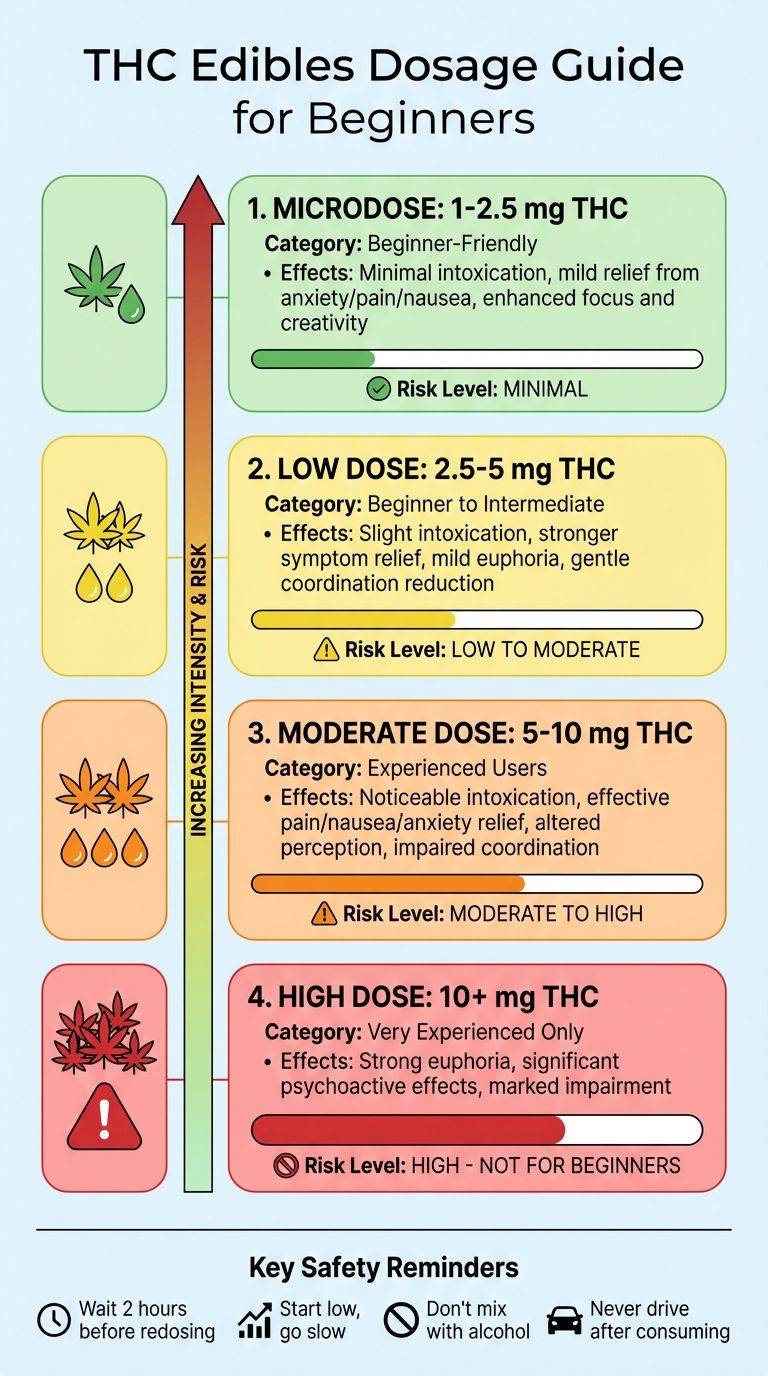
Cannabis Edibles THC Dosage Guide: Effects and Safety Levels for Beginners
Understanding how different dosage ranges work can help you decide on the right amount for your needs. Below is a guide to typical THC and CBD dosage levels and the effects you can expect.
THC Dosage Levels
-
Microdose (1–2.5 mg):
This is a great starting point. It provides minimal psychoactive effects, mild relief from pain, stress, or anxiety, and might even enhance focus and creativity. -
Low Dose (2.5–5 mg):
Offers stronger symptom relief with a touch of euphoria. You may notice slight intoxication, gentle euphoria, and reduced coordination. -
Moderate Dose (5–10 mg):
Preferred by experienced users, this range helps with pain, nausea, and anxiety. However, it comes with more noticeable impairment in coordination and perception. -
High Dose (10+ mg):
Recommended only for those familiar with edibles. This dose delivers strong euphoria and significant psychoactive effects, with marked impairment in coordination and perception. It's not suitable for beginners.
While THC is known for its psychoactive effects, CBD provides an alternative that focuses on wellness without intoxication.
CBD Dosage Guidelines
CBD is non-intoxicating and offers therapeutic benefits, such as reducing inflammation, easing anxiety, and alleviating pain - all while allowing you to stay clear-headed. In South Africa, many CBD products are available in doses of 10–20 mg. Like THC, it’s best to start small and adjust gradually based on your needs.
Dosage Comparison Table
Here’s a quick comparison of THC dosage levels and their effects:
| THC per dose | Category | Expected Effects | Risk Level |
|---|---|---|---|
| 1–2.5 mg | Microdose | Minimal intoxication; mild relief from anxiety, pain, and nausea | Minimal |
| 2.5–5 mg | Low Dose | Slight intoxication; stronger symptom relief with mild euphoria | Low to moderate |
| 5–10 mg | Moderate Dose | Noticeable intoxication; effective relief with altered perception | Moderate to high |
| 10+ mg | High Dose | Strong euphoria and significant psychoactive effects; not for beginners | High (not for beginners) |
Safety and Legal Information for South Africa
Safe Use Guidelines
When consuming edibles, it’s crucial to prioritise safety. Avoid combining edibles with alcohol, as this can intensify the effects unpredictably and may cause discomfort. Also, do not drive or operate machinery after consuming edibles. The effects can last for several hours, impairing coordination and judgement. Instead, stay in a secure and familiar environment.
If you find yourself feeling uneasy, there are simple steps you can take to manage the situation.
What to Do if You Take Too Much
While consuming too much THC can be unpleasant, it’s not life-threatening, and the effects will eventually subside. If you’re feeling overwhelmed, try to stay calm and remember that the discomfort is temporary. Move to a quiet, comfortable place where you feel safe. Drinking water or ginger tea can help, and a light snack might stabilise your blood sugar if you’re feeling nauseous. Activities like listening to soothing music, watching something light-hearted, or practising deep breathing can also ease discomfort.
Some people find relief by taking a small dose of CBD oil, as it may counteract THC’s psychoactive effects. Chewing black peppercorns is another option, as their terpene content might help reduce anxiety. However, avoid caffeine and strenuous activities, as these can worsen symptoms. If you experience severe reactions, such as intense panic or heart palpitations, seek medical attention immediately and inform the healthcare professional that your condition is cannabis-related.
South African Legal Framework
Understanding South Africa’s cannabis laws is essential for safe and lawful use. Adults are permitted to use cannabis within private spaces. However, the sale of THC-infused products is tightly controlled. CBD edibles are allowed under SAHPRA regulations, provided they contain less than 0.001% THC or offer a maximum daily dose of 20 mg.
It’s illegal to sell cannabis without proper licensing, consume it in public, supply it to others, drive under its influence, or allow minors to use it. Though commercial regulations are still developing, some suppliers operate under "member access" models for THC products within private use frameworks. To stay compliant, always purchase from trustworthy sources like Amazol that adhere to local laws.
Conclusion
Finding the right dose requires patience - start small and take it slow. For instance, beginning with 2.5 mg of THC and waiting at least two hours before considering more can help reduce the risk of overconsumption. Keep in mind that factors like your metabolism, tolerance, and even what you've eaten that day can affect how edibles work for you. There's no universal dosage that suits everyone.
Always enjoy edibles in a safe, relaxed environment, and never drive under their influence. Check product labels carefully to confirm the THC content, and don't hesitate to ask questions if you're unsure about what you're consuming. While taking too much can lead to discomfort, it's not dangerous, and the effects will wear off with time. Knowing how to use edibles responsibly ensures a more enjoyable experience.
For trustworthy guidance and high-quality products, Amazol is a dependable option. Their clear labelling and nationwide discreet delivery make it easier for both beginners and seasoned users to explore cannabis edibles with confidence.
Approach edibles with care and mindfulness. By following these steps and tuning into your body's reactions, you'll be ready to enjoy the benefits of cannabis edibles safely and responsibly.
FAQs
What’s the safest way to figure out the right THC dosage for cannabis edibles?
If you’re just starting out with cannabis edibles, the golden rule is to start low and go slow. Begin with a small dose - around 2.5 mg of THC - and give it at least 90 minutes to kick in before deciding whether to take more. This waiting period is crucial, as edibles take longer to show their effects compared to other forms of cannabis.
For most first-timers, keeping the dose between 2.5 mg and 5 mg is a safe way to explore how your body reacts. Everyone’s metabolism and tolerance vary, so patience is key. Rushing into a higher dose can lead to an overwhelming experience, so stick to small steps for a smoother, more enjoyable introduction.
What should I do if I accidentally take too much THC from cannabis edibles?
If you've had a bit too much THC, the first thing to do is stay calm. Find a quiet, cosy spot where you feel safe and can relax. Sip on some water to keep hydrated, and if you're up for it, have a light snack - this might help ease things a bit.
Some people swear by CBD oil or even chewing a few black peppercorns to help reduce anxiety. It's worth giving these a try. On the flip side, steer clear of alcohol - it can actually make the effects of THC stronger. If you’re feeling severe symptoms like intense anxiety, confusion, or a racing heart, don’t hesitate to seek medical help.
The good news? The effects will pass. Just focus on staying calm and letting your body do its thing.
How do factors like metabolism and body weight influence the right dosage for cannabis edibles?
Personal factors like metabolism and body weight significantly influence the right dosage of cannabis edibles. If you have a faster metabolism, your body may break down THC or CBD more quickly, which could mean the effects wear off sooner and you might need a slightly higher dose to achieve the same impact. On the other hand, individuals with a higher body weight often require a larger dose compared to those with a lower body weight to feel similar effects.
The best approach? Start small. A low dose - around 2.5 to 5 mg of THC - is a good starting point. Gradually increase if needed, while carefully observing how your body responds. Keep in mind, edibles can take 1 to 2 hours to kick in fully, so patience is crucial to avoid taking too much too soon.
0 comments