

Cannabis is increasingly used in South Africa to address sleep issues, thanks to its relaxing properties and the South African cannabis laws decriminalising private use. THC helps you fall asleep faster and promotes deep sleep, while CBD eases anxiety without the "high." Indica strains, rich in terpenes like myrcene and linalool, are favoured for their calming effects.
Key points to know:
- Short-term benefits: Faster sleep onset and deeper rest.
- Long-term caution: Regular use can lead to tolerance or reduced sleep quality.
- Consumption methods: Smoking works quickly (5–15 minutes), while edibles last longer (6–8 hours).
- Dosage tips: Start low (2.5–5 mg THC) and adjust gradually to avoid side effects like grogginess.
For best results, pair cannabis with healthy sleep habits and consult a healthcare provider if you're on medication. Indica strains like Northern Lights or local options like Critical Cape Cheese are good choices for restful nights.
How Cannabis Affects Sleep
THC, CBD, and Your Sleep Cycle
Cannabis impacts sleep by interacting with the body's endocannabinoid system (ECS). Cannabinoids like THC and CBD bind to CB1 receptors, triggering the release of chemicals that promote sleep. THC works as a sedative at lower doses, boosting levels of adenosine - a neurotransmitter that builds up sleep pressure throughout the day. On the other hand, CBD helps modulate CB1 receptors, easing pre-sleep anxiety and promoting a more balanced sleep cycle.
The two cannabinoids influence sleep stages in distinct ways. THC shortens the time it takes to fall asleep and increases deep (slow-wave) sleep in the short term. However, it also suppresses REM sleep, the stage tied to dreaming and emotional processing. This explains why users often fall asleep more quickly and experience deeper sleep initially. Meanwhile, CBD tends to preserve REM sleep patterns while promoting relaxation, making it particularly helpful for those struggling with bedtime anxiety.
| Cannabinoid | Primary Sleep Effect | Impact on Deep Sleep | Impact on REM Sleep | Psychoactivity |
|---|---|---|---|---|
| THC | Speeds up falling asleep | Short-term increase | Suppresses/Decreases | Intoxicating |
| CBD | Eases pre-sleep anxiety | Minimal effect | Protects REM patterns | Non-intoxicating |
| CBN | Acts as a sedative | Increases | Increases | Non-intoxicating |
Short-Term and Long-Term Sleep Effects
The way cannabis affects sleep depends heavily on how often it's used. In the short term, occasional use - spanning a few days or weeks - can lead to quicker sleep onset, deeper sleep, and fewer night-time interruptions. For example, a 2023 study found that 60% of insomnia patients reported improvements after just two weeks of THC:CBD treatment.
But with long-term or daily use, the story changes. Over time, users often develop a tolerance, meaning higher doses are needed to achieve the same effects. Chronic use can reduce deep sleep, shorten total sleep duration, and cause more frequent awakenings. Quitting after heavy use can also trigger "REM rebound", a phase marked by vivid dreams, night sweats, and trouble falling asleep. This rebound period typically lasts 24 to 72 hours. The Sleep Foundation highlights:
Those who use cannabis daily are more likely to report sleep problems than occasional users or people who do not use cannabis at all.
The method of consumption also matters. Smoked cannabis has a bioavailability of up to 56%, while edibles range between 4% and 20%. Edibles can delay the onset of effects, potentially disrupting the sleep-wake cycle. These variations highlight the complexity of cannabis's impact on sleep and the need for further research.
What Research Shows About Cannabis and Sleep
Recent studies shed light on how cannabis influences sleep regulation. Evidence suggests cannabis can be an effective short-term sleep aid, particularly for insomnia, but researchers remain cautious about its long-term effects. For instance, a 2021 study tracking 991 medicinal cannabis users across 24,189 sleep sessions found significant reductions in sleep-related symptoms. In another trial led by Walsh and colleagues, 24 participants with chronic insomnia used a THC:CBN:CBD formulation (20:2:1 mg/mL) for two weeks. Results showed a 5.1-point reduction in insomnia severity (as measured by the ISI) and a 33.4-minute increase in total sleep time, measured via actigraphy.
Cannabis has also shown promise for specific sleep disorders. Among PTSD patients, 72% reported either a complete stop or a significant reduction in nightmares after using nabilone, a synthetic THC derivative. Similarly, a six-week trial involving 56 people with Obstructive Sleep Apnoea revealed that taking 10 mg of dronabinol an hour before bed reduced the Apnoea Hypopnoea Index by 12.9 events per hour and improved daytime alertness.
Despite these encouraging findings, experts urge caution. Sleep scientist Matthew Walker, PhD, and author of Why We Sleep, explains:
The best way to describe it is that cannabis speeds the onset of non-consciousness - meaning it may not produce naturalistic sleep.
He also notes that THC suppresses REM sleep, often leading to incomplete recovery in the early morning hours. The Sleep Foundation summarises the challenge:
While cannabis may help relieve insomnia when used occasionally, researchers are unsure whether long-term use is ultimately beneficial or detrimental for sleep quality.
sbb-itb-e2e45ce
Selecting Cannabis Strains for Better Sleep
Indica vs Sativa for Sleep
When it comes to improving sleep, Indica strains are often the go-to option. These strains, which originate from the Hindu Kush region, are known for their calming, body-focused effects, making them ideal for nighttime use. On the other hand, Sativa strains are better suited for daytime activities, as they tend to provide an uplifting, energising head high.
The sleep-inducing qualities of Indica strains largely come down to their chemical makeup. They typically contain higher levels of myrcene, a terpene celebrated for its relaxing and sedative properties. When paired with THC, myrcene contributes to the "entourage effect", a synergy that can help ease physical discomfort, quiet racing thoughts, and induce a deep state of relaxation. As the NeuroLaunch editorial team notes:
"Indica strains are typically associated with relaxation, sedation, and physical effects... often described as providing a 'body high'".
However, it’s important to remember that many cannabis strains today are hybrids, blending traits from both Indica and Sativa varieties. This means that cannabinoid ratios and terpene profiles are often more telling than the strain's classification. For instance, even some Sativa-dominant strains, like Blue Dream, can support better sleep if they contain high levels of myrcene. Let’s dive deeper into specific strains and terpenes to help you make an informed choice for improving your sleep.
Sleep-Promoting Strains and Terpenes
In addition to strain classification, terpene profiles play a crucial role in enhancing sleep quality. When selecting a strain for better rest, focus on those rich in myrcene, linalool, and beta-caryophyllene:
- Myrcene: Known for its muscle-relaxing and anti-inflammatory properties.
- Linalool: Often associated with lavender, this terpene helps reduce anxiety.
- Beta-Caryophyllene: Offers pain relief and helps with stress-induced wakefulness.
Several strains have gained a reputation for being effective sleep aids. For example, Northern Lights, a classic Indica, is widely available in South Africa through seed banks like Marijuana SA (R724,99). This strain is known for its fast-acting sedative effects and ability to relax muscles. Another favourite, Granddaddy Purple, combines myrcene, beta-caryophyllene, and pinene to address both pain and insomnia. If you’re growing in South Africa’s drier inland areas, Master Kush (R690,00) is a dependable choice with consistent genetics and an earthy terpene profile that promotes full-body relaxation. For those seeking intense sedation, Critical Cape Cheese, a local favourite, delivers strong couch-lock effects.
| Strain Name | Primary Terpenes | Best Used For | Local Availability |
|---|---|---|---|
| Northern Lights | Myrcene, Beta-Caryophyllene | Fast-acting sedation, muscle relaxation | R724,99 (Marijuana SA) |
| Master Kush | Earthy/Herbal profile | Full-body relaxation, severe insomnia | R690,00 (Marijuana SA) |
| Granddaddy Purple | Myrcene, Caryophyllene, Pinene | Pain relief and deep sleep | Available locally |
| Critical Cape Cheese | Pungent/Cheese profile | Intense sedation, couch-lock | South African variety |
If you’re sensitive to THC’s psychoactive effects, consider trying a CBD-dominant strain like Remedy. This strain is rich in myrcene, pinene, and beta-caryophyllene, offering relaxation without the "high." For those dealing with anxiety-induced insomnia, balanced THC:CBD strains (often called "Type II") can help calm racing thoughts while still promoting relaxation. By understanding strain characteristics and terpene profiles, you can find the right product to suit your sleep needs and preferences.
Using THC and CBD for sleep | A cannabis doctor explains
Using Cannabis Safely for Sleep
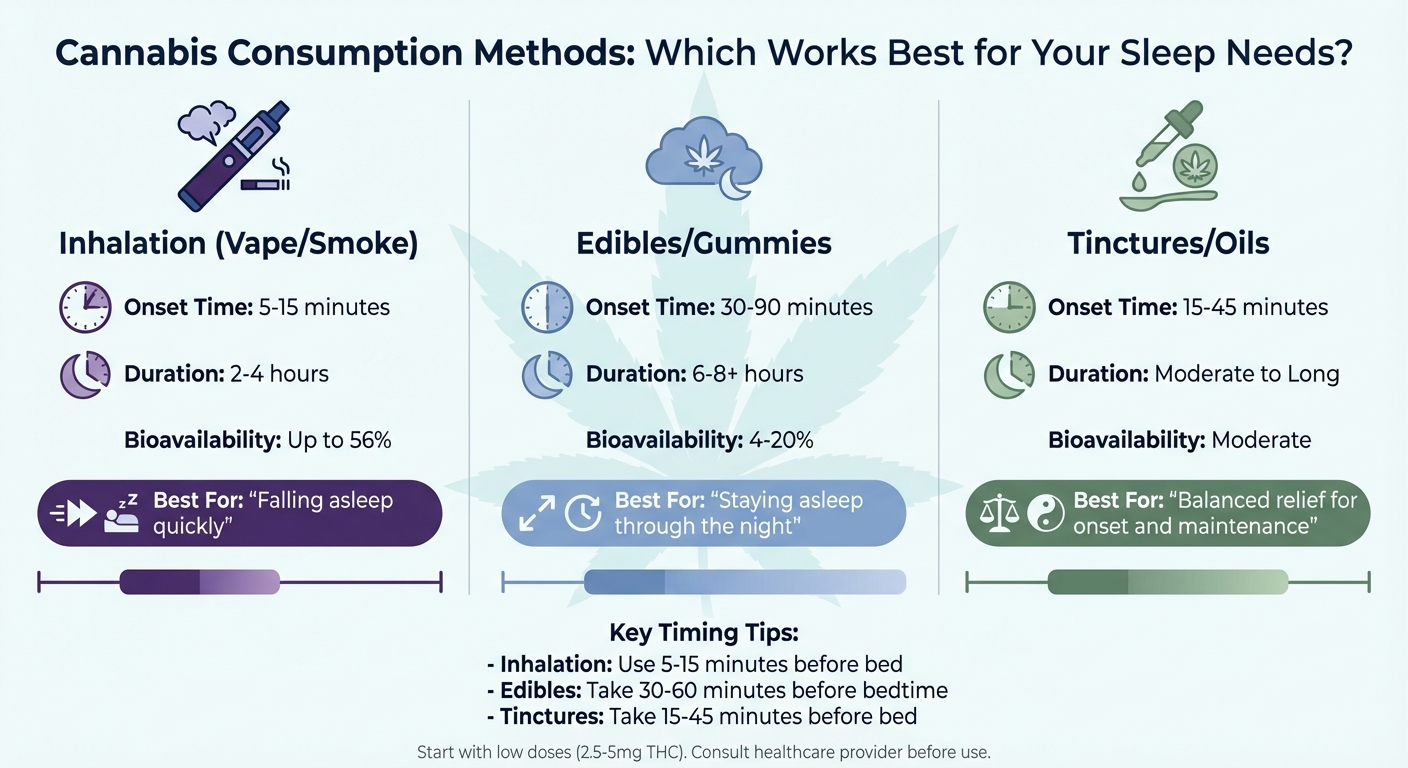
Cannabis Consumption Methods for Sleep: Onset Time, Duration and Best Use Comparison
Building on the basics of choosing the right strain, these tips will help you use cannabis safely and effectively to improve your sleep.
Consumption Methods for Sleep
How you consume cannabis plays a big role in how quickly it works and how long the effects last. If you're looking for quick relief, inhalation methods like smoking or vaping are your best bet. They kick in within 5 to 15 minutes, making them ideal if falling asleep is your main challenge. Plus, inhaled cannabis offers a bioavailability of up to 56%. However, the effects tend to wear off after 2 to 4 hours.
On the other hand, edibles, oils, and tinctures take a bit longer to start working. Edibles, like gummies, need to pass through your digestive system, so they take about 30 to 90 minutes to kick in. The upside? Their effects can last for 6 to 8 hours or more, which is helpful if you often wake up during the night. Tinctures fall somewhere in between, usually taking 15 to 45 minutes to work, offering a middle ground for both falling asleep and staying asleep.
Here's a quick summary to help you decide which method suits your needs:
| Method | Onset Time | Duration | Best For |
|---|---|---|---|
| Inhalation (Vape/Smoke) | 5–15 minutes | 2–4 hours | Falling asleep quickly |
| Edibles/Gummies | 30–90 minutes | 6–8+ hours | Staying asleep through the night |
| Tinctures/Oils | 15–45 minutes | Moderate to Long | Balanced relief for onset and maintenance |
Choosing the right consumption method ensures your cannabis use aligns with your sleep needs while keeping it safe and effective.
Dosage Guidelines and Safety Tips
Starting small is the golden rule when it comes to cannabis dosing. For beginners, a dose of 2.5 mg to 5 mg of THC is usually enough to help with sleep without causing unwanted effects like grogginess or dizziness. If you're using cannabis oil, start with 0.2 ml on the first night. Gradually increase by 0.1 ml each night until you find the right balance, but most people cap their dose at around 1.5 ml in clinical settings.
High doses - around 20 mg to 30 mg of THC - can lead to side effects like dry mouth, dizziness, and next-day grogginess. If you notice these issues, consider lowering your dose. To prevent tolerance, it's a good idea to take a one-week break every 8 to 12 weeks. Also, if you're on medications like warfarin, clozapine, or duloxetine, consult your healthcare provider first. CBD can interact with these drugs and affect how they’re processed in your body.
A careful and gradual approach to dosing, combined with proper timing, can enhance the sleep benefits of cannabis while minimising risks.
When to Use Cannabis for Best Results
Timing is everything. For inhalation methods, use cannabis about 5–15 minutes before bed. If you're opting for edibles, take them 30–60 minutes before bedtime to allow time for digestion. THC levels in your blood peak roughly 10 minutes after inhalation, making it an effective choice if you're looking to align its sedative effects with your bedtime.
Pairing cannabis use with good sleep habits can amplify its benefits. For instance, avoid screens for at least an hour before bed and stick to a consistent sleep schedule. Also, steer clear of high doses every night, as they can negatively impact sleep quality over time.
Conclusion
Key Takeaways
Cannabis, when used thoughtfully, can offer relief for sleep troubles. THC is known to help you fall asleep faster and deepen your sleep cycles, while CBD eases pre-sleep anxiety without causing a "high." Meanwhile, CBN provides calming effects with minimal intoxication. Indica-dominant strains are often favoured for sleep support due to their terpene profiles, including myrcene, linalool, and beta-caryophyllene, which are known to promote relaxation and ease muscle tension.
The way you consume cannabis also matters. Inhalation offers quick relief, typically within 5–15 minutes, while edibles take longer - around 30–60 minutes - but tend to provide longer-lasting effects throughout the night. Starting with a low dose, such as 2.5–5 mg of THC, can help reduce the risk of unwanted side effects. These tips underscore both the benefits and the need for caution when using cannabis to improve sleep.
Responsible Use of Cannabis
To make the most of cannabis while staying safe, it’s important to adopt responsible habits. Always consult a healthcare provider before beginning cannabis use, especially if you're on other medications, as interactions may occur. Overdoing it can suppress REM sleep and leave you feeling groggy the next day, so moderation is key.
Taking tolerance breaks every 8–12 weeks can help maintain the effectiveness of cannabis and prevent dependency. Pairing cannabis use with healthy sleep practices - like avoiding screens an hour before bed and sticking to a regular sleep schedule - can further improve results. Be sure to store all cannabis products securely, well out of reach of children and pets. Lastly, health experts often recommend caution with long-term reliance on any sleep aid, as it could impact overall sleep quality. A balanced and informed approach can help you enjoy better rest while minimising potential risks.
FAQs
How does cannabis affect REM sleep and dreaming?
Cannabis can have a notable impact on sleep, especially when it comes to rapid-eye-movement (REM) sleep. THC-rich strains are known to reduce REM sleep, which might also lead to fewer dreams. On the other hand, cannabis products with higher CBD levels or lower THC concentrations tend to have a gentler effect, helping to maintain a more natural REM sleep cycle.
For people struggling with insomnia or other sleep issues, finding the right balance between THC and CBD is crucial. Strains with calming effects, such as Indica-dominant ones, are often favoured for their ability to encourage relaxation and improve overall sleep quality. If you're exploring cannabis for sleep, start with a low dose and consider seeking advice from a healthcare professional to ensure you're on the right track for your specific needs.
What are the risks of using cannabis long-term for sleep problems?
Using cannabis over the long term as a sleep aid comes with several potential risks. One of the main concerns is tolerance - over time, your body may require larger doses to achieve the same calming effect. This can increase the chances of developing a dependence or even a cannabis use disorder. If you stop using it, you might experience withdrawal symptoms, such as difficulty sleeping and intense dreams, which could feel worse than the initial sleep problems.
Prolonged use can also interfere with your natural sleep cycles. For example, it may reduce REM sleep and deep sleep, which are crucial for memory retention and maintaining a balanced mood. Additionally, using cannabis in high doses or too frequently might lead to daytime drowsiness, slower reaction times, and difficulty concentrating - factors that can increase the risk of accidents. While smoking cannabis can irritate your lungs, even using edibles or vapourisers can result in side effects like fatigue or cognitive issues.
There’s also a connection between long-term use and mental health challenges. For individuals predisposed to conditions like anxiety, depression, or psychosis, cannabis might worsen these issues over time. Weighing these risks against the benefits is essential, and consulting a healthcare professional can help you explore safer, evidence-backed options for improving sleep.
What are the best cannabis strains for reducing bedtime anxiety?
If you're trying to calm your mind before bedtime, Northern Lights, an Indica-dominant hybrid, is often praised for its soothing qualities. Other well-loved choices include White Widow, Gorilla Glue #4, and Wedding Cake - all recognised for their ability to promote relaxation and help you settle in for a restful night.
To get the most out of these options, begin with a low dose and, if possible, consult a healthcare professional to determine the most suitable strain and dosage for your specific needs.
0 comments