

When selecting cannabis, quality is key - not just for better effects but for your health.
Contaminated cannabis from unregulated sources often contains mould, pesticides, or heavy metals, which can harm your lungs and bloodstream. Here's how to spot high-quality cannabis:
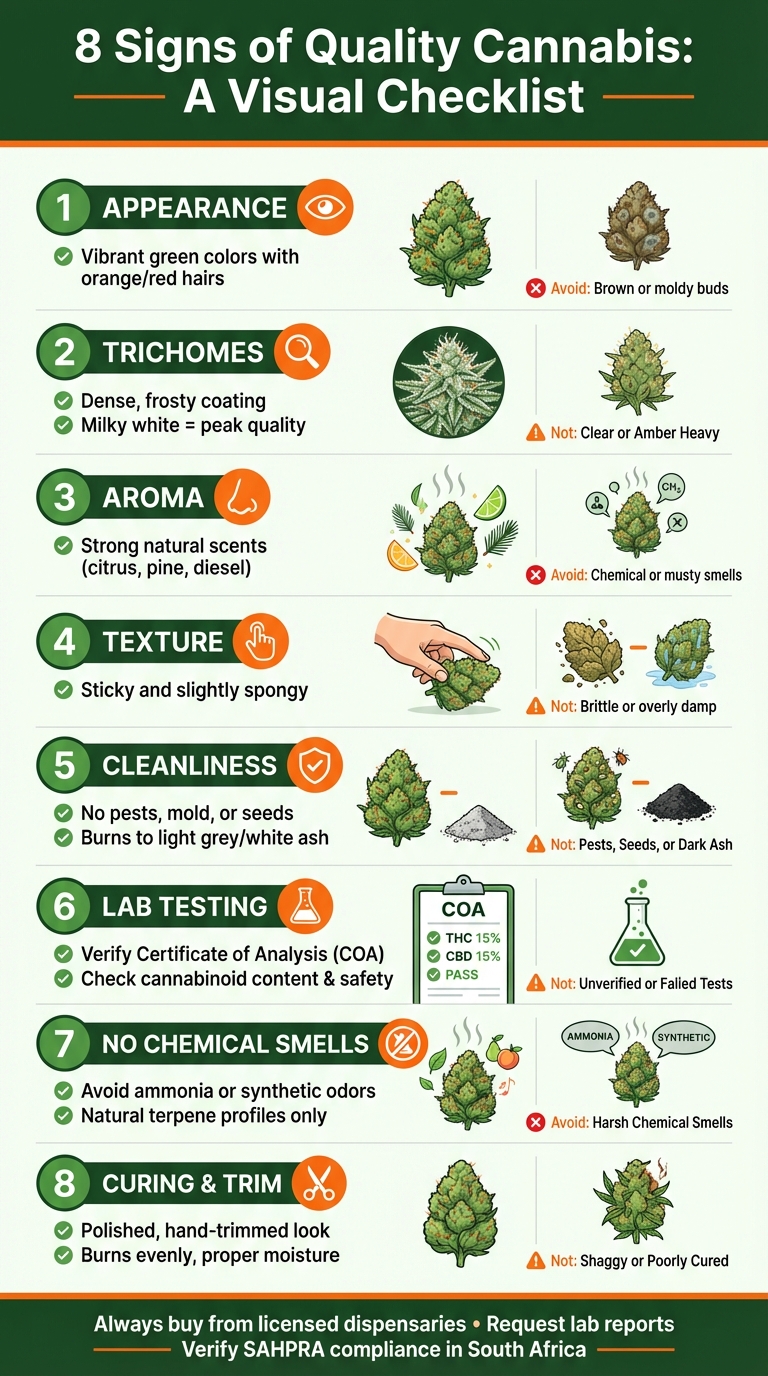
- Appearance: Look for vibrant green colours with orange or red hairs. Avoid brown or mouldy buds.
- Trichomes: Check for a dense, frosty coating. Milky trichomes signal peak quality.
- Aroma: Strong, natural scents (e.g., citrus, pine) indicate freshness. Avoid chemical or musty smells.
- Texture: Buds should feel sticky and slightly spongy, not brittle or overly damp.
- Cleanliness: Inspect for pests, mould, or seeds. Clean buds burn to light grey/white ash.
- Lab Testing: Always verify Certificates of Analysis (COA) for safety and cannabinoid content.
- Chemical Smells: Avoid cannabis with ammonia or synthetic odours.
- Curing and Trim: Properly cured cannabis has a polished look and burns evenly.
In South Africa, buying from licensed dispensaries ensures your cannabis meets SAHPRA standards. Always check for lab-tested products to avoid contaminants and enjoy a safer experience.
8 Quality Indicators for Choosing Premium Cannabis
How to Tell Top-Shelf Cannabis from Trash Flower
1. Inspect the Appearance
When it comes to identifying high-quality cannabis, the visual aspect is key. Top-tier buds often boast vibrant shades of green, ranging from lime to deeper hunter greens. These are complemented by fiery orange or red strands, known as pistils, which should be evenly spread across the bud. A "frosty" or shimmering look is another hallmark of quality, created by a dense coating of trichomes - those sugary resin glands that indicate potency. Under a magnifying glass, trichomes should appear milky or cloudy; clear ones suggest an early harvest, while amber tones point to a later harvest with more relaxing effects. Paying attention to these visual details can help you gauge the quality and potency of the cannabis.
Look for Bright Green Colours
Healthy, high-quality cannabis buds typically display vibrant green hues, sometimes with purple or blue undertones. Andrea from Medizin describes it well:
"A high-quality flower often has a deep-green colour with flaming red or orange hairs."
These buds may also sparkle under light, thanks to their trichomes, and are usually neatly trimmed to preserve their delicate structure. Even smaller "popcorn" buds - those from the lower branches - can meet high standards if they show these vibrant colours and maintain a dense layer of trichomes.
Avoid Discoloured or Mouldy Buds
Steer clear of buds with brown, tan, yellow, or faded colours, as these often signal age or improper storage. Quality cannabis showcases rich greens and purples, accented by deep orange hairs. On the other hand, poorly grown or stored cannabis, often referred to as "shwag" or "brick weed", tends to have a dull, brownish or yellowish appearance.
White spots on buds warrant closer inspection. In premium cannabis, these spots are crystalline trichomes. However, if they feel soft or dusty, they could indicate mould. Mouldy cannabis often has a greyish-white, powdery coating or dull patches that lack the usual shimmer, and it may emit a musty or damp hay-like smell. If you notice these signs, it’s best to discard the product entirely. Mould can spread quickly, and inhaling mouldy cannabis can be especially dangerous for people with weakened immune systems or lung conditions, as it may lead to severe infections caused by fungi like Aspergillus.
2. Check Trichome Density
Trichomes are the tiny resin glands responsible for cannabis's frosty, glittering look. These microscopic structures are where cannabinoids like THC and CBD, as well as aromatic terpenes, are produced and stored. A dense layer of trichomes is often a sign of high potency and quality, making it a key factor in assessing cannabis.
Examine Trichomes Under Light
To get a good look at the trichomes, hold your cannabis under a bright light. You’re looking for a shimmering, crystalline sparkle that covers the entire bud, not just the tips. High-quality trichomes should stand upright and have intact, bulbous heads, creating a snow-like coating. As Carl Christianson from True Labs for Cannabis explains:
"The frosty appearance of cannabis flower is thanks to dense, compound-rich trichomes, the resin glands of the plant... These trichomes should be milky white in their appearance, creating a snow-like layer around the flower."
For a closer inspection, use a magnifying tool to check the trichome colour. Milky or cloudy white trichomes indicate peak potency, with high levels of THC and CBD. Clear or translucent trichomes suggest the plant is immature, with less developed cannabinoids. On the other hand, amber or brown trichomes signal that the cannabinoids are breaking down, often resulting in a more sedative, "couch-lock" effect. If the bud lacks sparkle or the trichomes appear damaged or sparse, it could mean the cannabis was poorly handled or trimmed too aggressively by machines.
Test for Stickiness
Visual inspection is important, but touch can also reveal a lot about trichome quality. Gently press the bud - it should feel sticky and have a slight bounce. This stickiness comes from the resin in the trichomes and is a good indicator of high cannabinoid and terpene content. As Boveda explains:
"Sticky weed is resinous - a quality that signifies high trichome concentration and indicates an abundance of cannabinoids and terpenes."
When breaking apart the bud, it should separate easily but not crumble into dust or feel brittle. If it falls apart too easily or feels bone-dry, the trichomes may be damaged, and the terpenes could have evaporated. On the flip side, if the bud feels overly soft or wet, it might be over-hydrated and at risk of mould. To preserve the trichomes and maintain potency, handle your cannabis as little as possible, as excessive touching can damage these delicate structures.
3. Smell the Aroma
Once you've evaluated the appearance and trichome density, the next step is to assess the aroma. The scent of cannabis is a powerful indicator of its quality. High-grade buds are often described as having a "loud" aroma - pungent, layered, and unmistakable. This strong aroma comes from terpenes, the compounds found in the trichomes. A rich scent not only enhances the flavour but also contributes to the therapeutic effects of the flower. As Carl Christianson from True Labs for Cannabis explains:
"Quality cannabis flower contains significant amounts of these terpenes, and your nose can tell the difference. Cannabis that has a strong scent is likely fresher and higher quality than cannabis that does not give off much of a smell at all."
Identifying Fresh, Strong Scents
When you open a container of quality cannabis, it should hit you with bold, distinct aromas. Look for scents like diesel, pine, fresh citrus, tropical fruits, spices, or floral notes. The aroma can also hint at the strain type: sativa-dominant strains often have sweet, fruity, or citrusy profiles, while indica-dominant strains lean towards earthy, musky, or skunky tones. If the scent seems faint, try gently squeezing or breaking a small piece of the bud - this should release a burst of fragrance, confirming the terpenes are still intact. On the other hand, a weak or absent aroma could mean the flower is old, overly dried, or improperly stored.
Recognising Signs of Degradation
Not all scents are pleasant, and some can signal issues with quality. For instance, a fresh-cut grass or hay-like odour could indicate poor curing, leaving chlorophyll trapped in the buds. An ammonia-like smell might mean the buds were packaged too moist, creating conditions for bacterial growth. Musty, mildewy, or damp basement smells are red flags for mould contamination, which makes the product unsafe to use. Similarly, a chemical or plastic-like scent could point to pesticide residues or packaging materials leaching into the flower. Any of these off-putting aromas should be taken as a warning to steer clear of the product.
Aroma plays a vital role in determining the quality of cannabis, making it an essential step in the evaluation process.
4. Test the Texture
After evaluating the aroma, the next step is to examine the texture, which provides further clues about the quality of the cannabis. The texture can reveal details about how the plant was grown, dried, and cured. A premium flower should feel firm but slightly springy, with a sticky, resinous coating from its trichomes. It shouldn’t be bone-dry or overly damp - both extremes suggest poor handling or storage. As Carl Christianson from True Labs for Cannabis puts it:
"Fresh, potent cannabis will easily break apart, but it will not be brittle or crumbly as it is handled."
Check Bud Density
Dense buds are often a sign of high-quality cannabis, reflecting a healthy growing process. When you gently squeeze a bud, it should compress slightly and then quickly spring back to its original shape. This bounce-back is a strong indicator of quality. On the other hand, buds that are too hard might hint at the use of growth enhancers, while airy or wispy buds often point to less-than-ideal growing conditions.
Check Moisture Content
Moisture content is another key factor in determining quality. Properly cured cannabis typically contains between 4% and 13% moisture by weight. To test this, try the snap test: gently bend a small stem attached to the bud. If it snaps cleanly, the flower is adequately dried. If it bends without breaking, it’s too moist. Another method is the squeeze test - briefly compress the bud. It should feel slightly spongy and return to its shape. Buds that crumble into dust are over-dried, while those that remain flattened or feel overly soft are too moist and may be prone to mould.
A simple breaking or bending test will tell all. Take a branch and try breaking it. If it breaks, then the buds are dry and ready for curing. On the other hand, if the stem bends, you need to leave them to dry a little longer.
High-quality buds should have a sticky feel from their resinous trichomes, a sign of proper curing, but they should never feel wet or damp.
5. Look for Clean Buds
Once you've assessed the texture, it's time to inspect the buds for cleanliness. This step isn't just about quality - it's about your health. Clean buds indicate proper handling and storage, while contaminated cannabis could expose you to harmful fungi or pests. Rowan Bailey from Infinity CBD puts it plainly:
"The effectiveness of your medical treatment depends on the purity and integrity of the cannabis you use."
Spot Signs of Mould
Mould is a tell-tale sign of compromised cannabis. It often appears as greyish-white powdery spots or fuzzy patches, which are very different from the upright, sparkling trichomes found on quality buds. A 2017 study led by George Thompson III at UC Davis uncovered potentially dangerous fungi - like Aspergillus, Mucor, and Cryptococcus - on cannabis samples from Northern California dispensaries and growers. These fungi pose serious risks, especially for individuals with weakened immune systems.
To differentiate between mould and trichomes, use a magnifying glass. Trichomes resemble tiny, upright mushrooms with clear or milky heads, while mould spreads in flat, weblike patterns. Adrienne Santos-Longhurst advises:
"If you can see mould or mildew, you're better off tossing it. It's not going to taste or smell good anyway, and could make you feel sick."
When inspecting larger, denser buds, break them open to check for bud rot (Botrytis). This type of mould often starts near the stem, where moisture tends to accumulate. If mould is visible on any part of the bud, discard the entire flower. Fungal spores are microscopic and can easily spread throughout.
Check for Pests or Residue
Top-quality cannabis should be free from pests, dirt, seeds, or any unusual residues. Seeds and excess stems not only lower potency but may release harmful by-products when burned. As Bloom explains, "Seeds and stems can both produce toxins and carcinogens that can be harmful to the lungs and airways".
Another indicator of clean cannabis is the ash it produces when burned. Light grey or white ash suggests the buds are free from contaminants, while dark or black ash may indicate leftover pesticides, nutrients, or other impurities. Once you've confirmed the buds are clean and contaminant-free, you can move on to checking lab testing and potency to ensure you're making a safe and informed choice.
6. Verify Lab Testing and Potency
After cleaning your cannabis buds, the next step is to verify lab testing. Lab-tested cannabis with clearly outlined THC and CBD profiles ensures both quality and safety. As Carl Christianson from True Labs for Cannabis explains:
"A lab report is the best way to identify whether your cannabis is safe to consume and the product contains what it claims on the label."
This process involves reviewing the product's Certificate of Analysis (COA), which provides detailed test results essential for confirming the product's integrity.
Review Certificates of Analysis
A valid COA is your assurance that the product has undergone independent lab testing. It should cover potency (THC, CBD, and other cannabinoids like CBG, CBN, CBC, and THCV), safety screenings (for pesticides, heavy metals such as arsenic, cadmium, lead, and mercury, microbial contaminants like E. coli and Salmonella, mycotoxins, and residual solvents), and product specifics (e.g., report date, lab credentials, brand name, and batch number matching your product). Testing methods like High-Performance Liquid Chromatography (HPLC) or Gas Chromatography (GC-MS) are typically used for these analyses.
You can request a COA directly or scan the product's QR code to access lab results. Pay close attention to the safety sections, ensuring they display "ND" (None Detected) or "Pass" for contaminants. For cannabis flower, the COA should also include moisture content (ideally between 4% and 13%) and verify the absence of foreign materials like stems, seeds, or insects. In South Africa, labs such as Qure and Ecogreen Analytics offer these services, with basic potency tests costing around R550 and full cannabinoid profiles approximately R975.
Avoid Untested Products
Steer clear of products without a current and matching COA. Research shows that more than 80% of analysed cannabis samples have been found to contain contaminants, highlighting the importance of lab verification for your safety. As Qure succinctly puts it:
"A tested and certified product should be the norm – growers, producers and consumers need to have accurate information about the product they are growing, manufacturing or consuming."
If a supplier fails to provide a current COA with a matching batch number, or if the testing was done by an in-house facility instead of an independent third-party lab, it’s best to walk away.
7. Detect Chemical Smells
Good-quality cannabis should never carry chemical odours. If you notice such smells, it could be a warning sign of pesticide contamination or leftover solvents from the extraction process. A chemical or plastic smell could indicate pesticide contamination or poor packaging.
These chemical scents might point to harmful substances like Class 1 carcinogenic solvents (e.g., benzene) or heavy metals absorbed from polluted soil. They could also hint at synthetic additives, such as artificial cannabinoids sprayed onto inferior crops to boost potency artificially. It's important to distinguish these unpleasant notes from the natural, complex aromas that high-quality cannabis should have.
Smell for Natural Aromas
Premium cannabis offers a rich blend of scents, including pine, citrus, skunk, and earthy tones. In contrast, any trace of ammonia, chemicals, or synthetic additives likely signals contamination. To uncover hidden chemical smells, crumble the flower and take a whiff - this will expose any unnatural odours that might be masked. If you detect ammonia or a "freshly cut grass" aroma, the cannabis is probably under-cured or uncured. Additionally, when smoked, clean cannabis typically leaves behind light grey or white ash, whereas black ash might indicate excess moisture or contaminants.
Check SAHPRA Compliance

In South Africa, ensuring compliance with local regulations is another layer of protection against chemical contaminants. Make sure your cannabis is sourced from licensed facilities that adhere to SAHPRA (South African Health Products Regulatory Authority) standards. These guidelines mandate testing for heavy metals like arsenic, cadmium, lead, and mercury, as well as for pesticides and residual solvents. According to Qure, a South African testing lab, lead levels in cannabis should stay below 0,5 ppm to meet international safety benchmarks. While lab reports provide scientific confirmation, combining them with your sensory checks and verifying local compliance ensures a more thorough evaluation. Always ask for a Certificate of Analysis to confirm the cannabis is free from harmful contaminants.
8. Check Curing and Trim Quality
The final step in evaluating cannabis quality is to assess the curing and trimming processes. Proper curing is essential for developing the full flavour and potency of the product. When done right, curing transforms freshly harvested cannabis - which initially contains about 75% water - into a product with an ideal moisture content of 10% to 15%. This process also breaks down chlorophyll, replacing any harsh, grassy, or hay-like smells with the complex aromatic profile of the strain's terpenes. This step ensures that the flavour and potency established earlier in the cultivation process are preserved.
Look for Even Trimming
High-quality cannabis should have a clean, polished appearance, with most of the leafy material removed to highlight the natural structure of the flower. Hand-trimmed buds are particularly desirable, as they remain intact and preserve the delicate trichomes that contain the cannabinoids and terpenes. As Bloom explains:
"By taking the time to trim flower buds by hand, cultivators can make sure you receive whole flower buds. This can help to ensure the trichomes on the buds are not disturbed".
An ideal flower should have a minimal stem-to-flower ratio, as excess stems add unnecessary weight without contributing to potency or flavour. Additionally, avoid buds with an abundance of sugar leaves left attached; this often indicates a rushed trimming process, which can lead to a harsher smoking experience.
Avoid Over-Dried or Loose Buds
Properly cured buds should feel slightly sticky to the touch, compress easily, and quickly return to their original shape. If a bud crumbles into dust when handled, it has been over-dried, which not only reduces flavour but also leads to a harsher smoke. When consumed, well-cured cannabis should burn to a light grey or white ash - darker ash may signal poor flushing or curing. Pay attention to the colours of the buds; vibrant greens, purples, and oranges are signs of freshness, while brown, tan, or yellow hues suggest over-drying or ageing.
Buying Cannabis in South Africa
In South Africa, using cannabis privately is decriminalised, but selling it for recreational purposes remains illegal. Medical cannabis, however, is available through licensed channels. Since 2018, private cultivation and use have been decriminalised, with further legal clarity provided by the Cannabis for Private Purposes Bill in May 2024. Despite this progress, the commercial sale of recreational cannabis is still not permitted. For those seeking legal access, the only option is through medical channels. This involves obtaining a prescription from a health practitioner licensed by SAHPRA, which can then be filled by pharmacists registered with the South African Pharmacy Council. Following these steps ensures compliance with regulations and guarantees access to quality-controlled products.
Review Batch Reports
Beyond visual checks, it’s essential to verify a product’s safety through its batch report. A current Certificate of Analysis (COA) will confirm the phytocannabinoid profile, including THC and CBD levels, and ensure the product is free from contaminants like pesticides, heavy metals, and residual solvents. Carl Christianson from True Labs for Cannabis emphasises:
"A lab report is the best way to identify whether your cannabis is safe to consume and the product contains what it claims on the label".
Reputable dispensaries should provide these reports either upon request or via QR codes on the packaging. If a supplier cannot offer batch documentation, it’s best to avoid their products. Research shows that over 80% of unregulated cannabis tested was found to be contaminated in some way.
Conclusion
High-quality cannabis stands out through distinct visual, tactile, and combustion characteristics. Look for vibrant colours, intact trichomes, and a strong, pleasant aroma. The texture should feel sticky yet spongy, with stems that snap cleanly rather than bend or crumble. When burned, properly cured cannabis produces white or light grey ash, indicating effective curing and nutrient flushing. In contrast, dark ash may hint at residual moisture or contaminants.
Beyond sensory inspection, lab verification is essential. A Certificate of Analysis confirms the cannabinoid content and checks for harmful contaminants. As Carl Christianson from True Labs for Cannabis explains:
"A lab report is the best way to identify whether your cannabis is safe to consume and the product contains what it claims on the label".
Without a valid lab report, you risk compromising both safety and potency.
To further ensure quality, always purchase from reputable dispensaries. In South Africa's growing cannabis market, trusted sources like Amazol offer premium quality products and discreet nationwide delivery. Whether you're looking for premium indoor flower, concentrates, or pre-rolls, prioritising lab-tested cannabis guarantees a safer, more enjoyable experience. By combining sensory checks and lab results, you can confidently shop for cannabis that meets the highest standards.
FAQs
How do I know if cannabis has been properly cured?
Properly cured cannabis stands out with a few unmistakable features. Look for buds with vibrant green or purple hues and a frosty coating of milky-white trichomes. A rich, distinct aroma from the terpenes is another good indicator of quality. When you break a bud, it should feel dry yet slightly springy, giving a clean 'snap' rather than crumbling apart or feeling damp. Steer clear of buds that are overly brittle, mushy, or show signs of mould or discolouration. These details can help you confidently choose high-quality cannabis.
Why is lab testing essential for ensuring cannabis quality?
Lab testing plays a crucial role in ensuring cannabis is safe for consumption and meets quality benchmarks. It confirms that the product is free from harmful substances like pesticides, mould, and heavy metals. Beyond safety, testing also verifies the potency and cannabinoid or terpene profiles listed on the label, giving you a clear understanding of what you're purchasing.
For consumers in South Africa, opting for lab-tested cannabis provides confidence and allows for informed choices, whether you're using it recreationally or for medicinal purposes. Make sure to buy from reputable sources that prioritise thorough testing to ensure a reliable and high-quality product.
Why should I avoid cannabis with a chemical smell?
Cannabis that carries a chemical-like smell might be a red flag for contamination. This could mean it's been exposed to harmful substances such as pesticides, fungicides, heavy metals, or even added solvents. When heated or smoked, these contaminants can irritate your respiratory system and may release toxic compounds.
To protect yourself, stick to cannabis from reputable suppliers that emphasise quality control. Opt for products with natural, earthy scents, which usually indicate a healthy terpene profile, rather than those with artificial or chemical-like odours.
0 comments