

Cannabis edibles are becoming a popular choice for anxiety relief in South Africa, especially since the 2018 decriminalisation of private cannabis use. These edibles, infused with compounds like THC and CBD, offer a discreet, smoke-free option with long-lasting effects (4–12 hours). Studies show that certain cannabis strains can reduce anxiety by up to 52%, and nearly 60% of South Africans seeking alternative treatments for anxiety now turn to edibles.
Key points to know:
- How Edibles Work: THC is metabolised into 11-hydroxy-THC, providing prolonged calming effects. CBD helps with relaxation and balances THC's effects.
- Safe Dosing: Start with 2.5–5 mg THC for beginners; wait at least two hours before consuming more.
- Product Options: Balanced THC:CBD edibles are ideal for anxiety. High-CBD, low-THC options are non-psychoactive.
- Legal Guidelines: Possession and private use are legal, but public consumption and selling edibles remain prohibited.
Edibles can be a useful tool for managing anxiety symptoms, but proper dosing and understanding their effects are crucial. Always store them securely to prevent accidental ingestion.
THC and anxiety: how to find the right dose
Anxiety in South Africa: Understanding the Problem
Anxiety is one of South Africa's most challenging mental health issues, affecting about 1 in 6 people who struggle with anxiety or depression. The situation is even more alarming among young people - 20.9% of school-going adolescents in the Western Cape Province show symptoms severe enough to suggest a clinical diagnosis. These numbers paint a stark picture of a mental health crisis impacting families across the nation.
Several factors contribute to the prevalence of anxiety disorders in South Africa. Work stress, financial difficulties, and domestic violence are some of the key drivers. Additionally, the trauma linked to crime and motor-vehicle accidents affects millions - research estimates that up to 6 million South Africans may suffer from post-traumatic stress disorder as a result. Families dealing with substance abuse face even greater challenges. For example, in Tshwane, 73% of family members of nyaope users reported experiencing anxiety symptoms, with 16.92% suffering from severe anxiety.
Traditional treatments often fail to meet the needs of those affected. While mainstream options like antidepressants and benzodiazepines help around 60% of patients, fewer than half achieve full recovery. The barriers to effective treatment are significant: pharmaceutical costs can exceed R28,528 per 100 mL, side effects discourage continued use, and access to quality mental health services remains out of reach for many South Africans. This treatment gap leaves individuals searching for alternatives.
A study underscores the limitations of conventional approaches:
"About 60% of patients respond to mainstream treatments to a significant degree; however less than half of respondents achieved recovery." - Bystritsky, Psychiatry Research
Given the high costs and limited success of traditional treatments, many South Africans are exploring other options. Nearly 60% of individuals seeking alternative relief for anxiety are now turning to cannabis edibles. These edibles provide sustained, balanced effects, making them an appealing choice for those who haven’t found success with conventional methods.
How Cannabis Edibles Work for Anxiety Relief
Cannabis edibles interact with the endocannabinoid system (ECS), a key player in regulating emotions, memory, and stress. When consumed, compounds like THC and CBD mimic or amplify the effects of natural chemicals in the body, such as anandamide and 2-AG. This interaction helps restore balance in critical brain regions like the amygdala, prefrontal cortex, and hippocampus - areas closely tied to anxiety regulation.
Unlike smoking cannabis, edibles are metabolised differently. When ingested, THC is converted by the liver into 11-hydroxy-THC, a compound that binds more strongly to brain receptors, offering longer-lasting effects. While smoking or vaping typically provides relief for 2–3 hours, edibles release their effects gradually, lasting up to 12 hours. This slow and steady release reduces the risk of sudden spikes or drops in effects, which could otherwise heighten anxiety. This controlled mechanism is what makes edibles a practical option for anxiety relief.
Benefits of Using Edibles for Anxiety
Edibles come with several advantages for managing anxiety. Their prolonged effects mean you don’t need to re-dose frequently. They’re also discreet and avoid the respiratory risks linked to smoking, making them a health-conscious choice. Another key benefit is the availability of pre-measured doses, typically in 5 mg or 10 mg units. This allows for precise control over intake, which is especially helpful when finding the dose that works best for your body.
THC and CBD: How They Affect Anxiety
THC and CBD influence anxiety differently. THC binds to CB1 receptors in the brain, and its effects depend largely on the dose. Lower doses (2.5–5 mg) can promote relaxation, but higher doses may lead to unwanted effects like paranoia or panic. As Pertwee RG notes:
"THC at lower doses can produce effects such as euphoria, relaxation and sociability, whereas higher doses can have adverse effects including dysphoria, panic and phobia."
CBD, on the other hand, is non-psychoactive and consistently shows calming effects. It works by interacting with serotonin (5-HT1A) receptors and inhibiting FAAH, an enzyme that breaks down anandamide, thus enhancing its soothing properties. A 2019 study found that 80% of patients using CBD for anxiety reported improvement within the first month. For many, a balanced CBD:THC ratio or CBD-dominant products are the most effective for managing anxiety. CBD can also counteract THC’s tendency to overstimulate, offering a more stable experience.
Selecting Amazol Edibles for Anxiety Management
Strain Types and Dosage Guidelines
When choosing edibles for anxiety relief, it's helpful to compare Indica-dominant strains with balanced CBD/THC products. Indica-dominant strains are often preferred because of their calming and sedative properties. Meanwhile, balanced products with a 1:1 CBD to THC ratio can provide a more controlled experience. This is thanks to the "entourage effect", where CBD helps moderate THC’s potential to overstimulate, resulting in a more relaxing outcome .
If you're new to edibles, start with a microdose of 2.5–5 mg THC . This cautious approach is important, as panic or paranoia contributes to about 74% of cannabis-related emergency room visits. After taking an edible, wait at least two hours before deciding to take more, as it can take anywhere from 30 minutes to two hours to feel the effects. For better absorption, consider consuming edibles after a high-fat meal, which can increase THC absorption by up to 2.7 times.
Explore Amazol's tailored edible options below to find the best fit for your needs.
Amazol Products for Anxiety Relief
Amazol's edibles collection offers a variety of products designed to address different levels of anxiety. For balanced relief, Carebear Gummies (10 mg CBD / 10 mg THC) are ideal. The CBD content helps counteract THC’s potential to cause anxiety, making them a good choice for beginners or those seeking gentle relaxation. If you prefer non-psychoactive options, Moringa CBD+ Capsules (R200,00 for 60 capsules) deliver high CBD content with minimal THC, perfect for managing daily stress without intoxication.
For those with some tolerance, Azishe Sourworms Crisp Apple (R80,00 for 90 mg total THC, divided into 6 x 15 mg pieces) provide mild euphoria and a calming effect. If you’re more experienced and looking for something stronger, Azishe Choco Cojones (20 mg THC per piece) offer deeper sedation, making them a great option for severe evening tension. Always check lab test results to confirm THC levels and ensure quality.
Amazol Edibles Comparison Table
To make it easier to choose the right product, here’s a comparison of Amazol’s key edibles:
| Product Name | THC/CBD Content | Benefits | Onset Time | Duration of Effects |
|---|---|---|---|---|
| Carebear Gummies | 10 mg CBD / 10 mg THC | Balanced relaxation; CBD tempers THC effects | 45–90 mins | 4–6 hours |
| Azishe Sourworms | 15 mg THC per piece | Mild tranquil state for those with tolerance | 45–90 mins | 4–6 hours |
| Moringa CBD+ Capsules | CBD focused | Non-psychoactive daily stress management | 60–90 mins | 6+ hours |
| Azishe Choco Cojones | 20 mg THC per piece | Deep relaxation for experienced users | 45–90 mins | 4–6 hours |
With nearly 60% of people exploring edibles for anxiety relief, finding the right product often takes some experimentation. Start with safe doses and adjust gradually to discover what works best for you.
sbb-itb-e2e45ce
Safe Use and Legal Requirements in South Africa
Cannabis Edibles Dosage Guide for Anxiety Relief
How to Dose Safely
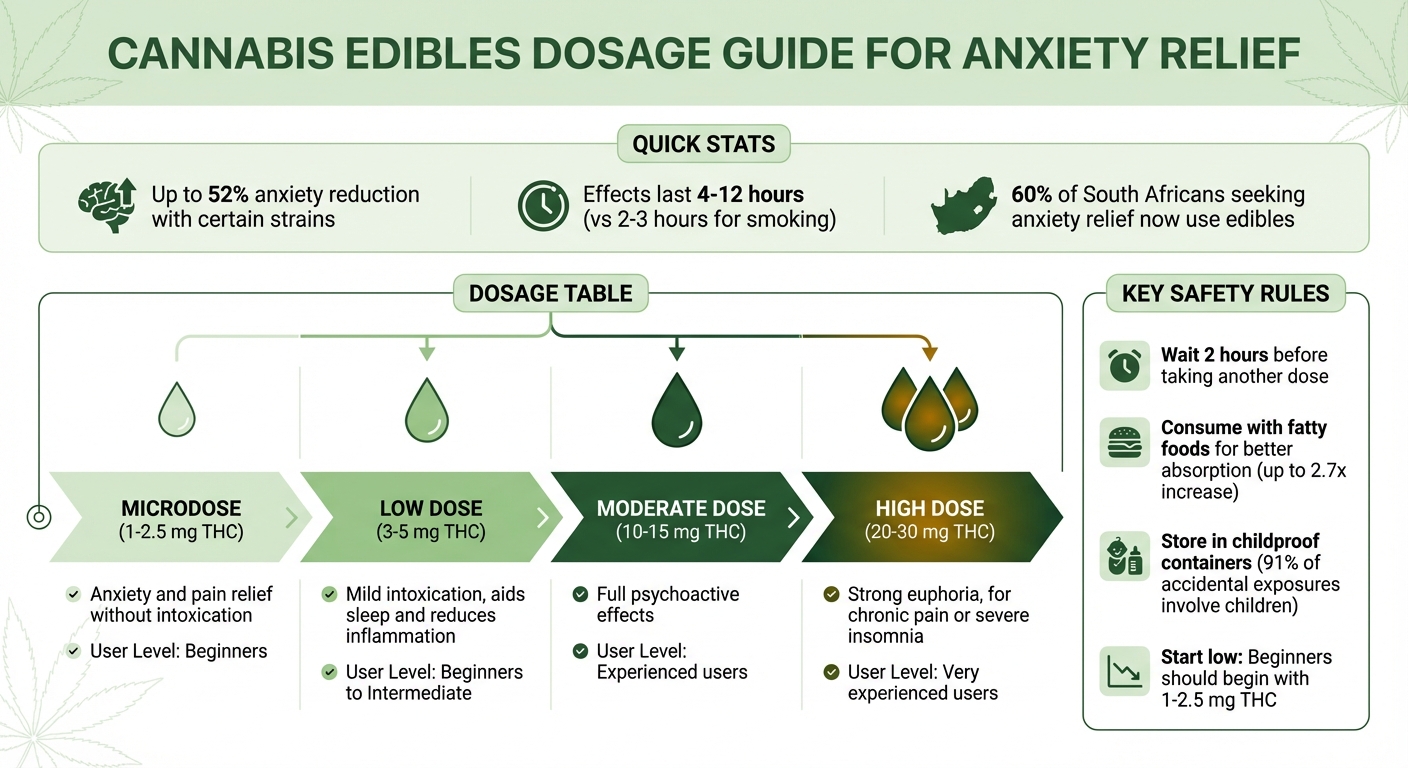
Starting small is the key to safely exploring cannabis edibles. For beginners, a microdose of 1–2.5 mg of THC is recommended. This minimal amount allows you to see how your body reacts without overwhelming psychoactive effects. Keep in mind, factors such as metabolism, weight, and tolerance can influence how THC affects you.
Another crucial guideline is the two-hour rule. After consuming an edible, wait at least two hours before considering another dose to avoid unintended overconsumption. For better absorption, pair your edible with fatty foods.
| THC Content per Dose | Dosage Category | Effects |
|---|---|---|
| 1–2.5 mg | Microdosing | Helps with anxiety and pain relief without intoxication |
| 3–5 mg | Low Dose | Mild intoxication; may aid sleep and reduce inflammation |
| 10–15 mg | Moderate Dose | Full psychoactive effects; suitable for experienced users |
| 20–30 mg | High Dose | Strong euphoria; often used for chronic pain or severe insomnia |
Knowing your limits and adhering to safe dosing practices ensures a more controlled and enjoyable experience.
South African Cannabis Laws
Understanding the legal landscape is just as important as knowing how to dose. Under the Cannabis for Private Purposes Act of 2024, cannabis use and possession are legal for adults aged 18 and older, but only in private spaces. When in public, adults can carry up to 100 g of dried cannabis flower, provided it is concealed. However, consuming cannabis - whether through edibles, smoking, or vaping - is strictly banned in public, in vehicles on public roads, or in the presence of children or non-consenting adults [36, 38].
"The use, including smoking, of cannabis in public or in the presence of children or in the presence of non-consenting adult persons is not permitted." – Cannabis for Private Purposes Act, 2024
When it comes to edibles, the commercial sale of recreational cannabis products is still illegal. While you can legally possess and consume edibles in private, buying or selling them in any form - whether for money, gifts, or favours - is considered dealing and is prohibited [36, 37].
For those seeking medicinal cannabis, obtaining THC products requires a prescription and approval from the South African Health Products Regulatory Authority (SAHPRA). This involves applying through Section 21, with an application fee of approximately R400. On the other hand, CBD products are more accessible: they are legal without a prescription as long as they contain no more than 600 mg per pack, 20 mg per dose, and a THC level below 0.001%.
Handling Overconsumption and Side Effects
Edibles can sometimes cause overconsumption due to their delayed onset and longer-lasting effects. While the experience can be distressing, it’s important to note that there has never been a confirmed death caused by THC. As Wayne Schwind, Founder of Periodic Edibles, explains:
"An edible (or THC) 'overdose' is not like an overdose from other drugs with life-threatening implications - while the experience can be uncomfortable, there has never been a confirmed death caused by THC".
If you or someone else consumes too much, the best approach is to remain calm. Find a quiet, dimly lit space to relax and give your body time to metabolise the THC. Staying hydrated with water or ginger tea can help ease dry mouth and nausea, while light snacks like crackers or fruit may help stabilise blood sugar levels. Avoid caffeine and alcohol, as they can worsen dehydration and amplify the psychoactive effects. These simple steps can make the experience more manageable until the effects wear off.
CBD oil can also help counteract THC’s intensity by calming the mind and reducing feelings of paranoia. Another option is chewing or smelling black peppercorns, which contain terpenes that can naturally soothe THC-induced anxiety.
Common signs of overconsumption include a rapid heartbeat, dizziness, paranoia, nausea, and loss of coordination. To alleviate these symptoms, try deep breathing, listening to calming music, or watching a comforting show. Resting or sleeping often helps the effects fade more quickly.
However, if severe symptoms occur - such as persistent chest pain, extreme hallucinations, or difficulty breathing - seek medical attention immediately. For children, accidental ingestion can lead to more serious issues, like trouble walking or breathing, which may require hospitalisation. To prevent such incidents, always store edibles in locked, childproof containers.
Conclusion: Using Cannabis Edibles for Anxiety
Cannabis edibles can be a helpful tool for managing anxiety when used thoughtfully and responsibly. The key is understanding your specific needs and sticking to appropriate doses. Research shows that certain cannabis strains may reduce anxiety by up to 52%, but achieving these benefits relies heavily on careful dosing.
Patience is essential when using edibles. Always start with a low dose and wait at least two hours before considering another. The delayed onset of effects can tempt some to take more too soon, which often leads to overconsumption and unwanted side effects.
For anxiety relief, consider focusing on Type II (balanced THC:CBD) or Type III (high CBD, low THC) chemovars, such as those in our edibles collection. Low doses of THC - less than 7.5 mg - are generally effective in reducing anxiety, while higher doses (above 10 mg) may worsen symptoms, especially for beginners. Keeping track of your dosages can help you discover what works best for you.
It’s important to remember that cannabis edibles are not a cure for anxiety but a way to manage its symptoms. For the best results, pair them with wellness practices like meditation, deep breathing, or light exercise, which can enhance their calming effects. Lastly, always store cannabis products securely in child-proof containers. A staggering 91% of accidental exposures reported to poison control centres involve children.
0 comments